
Digital Standee vs Traditional Banner: Which Is Better for Malaysian Businesses in 2026?
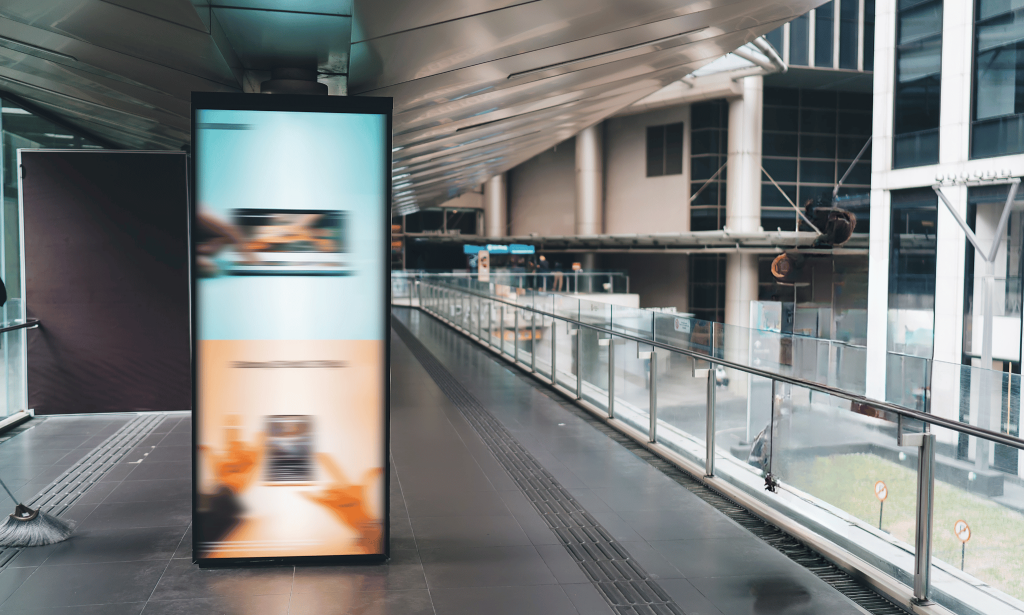
LED Display Digital Standee vs Traditional Banner: Which Is Better for Malaysian Businesses in 2026? A Malaysian business planning a promotion may face a familiar choice: order another printed banner or invest in a digital standee. A traditional banner costs less initially and works without electricity, while a digital standee can display videos, rotate multiple messages and update content without reprinting. Neither option is automatically better for every campaign. The right choice depends on how often your content changes, how long the display will be used, where it will be placed and how many locations you need to manage. The Short Answer Traditional banners are generally better for one-off events, short campaigns and businesses with a limited initial budget. Digital standees are usually the stronger option when promotions change frequently, several messages must share one display, or content needs to be managed across multiple branches. The financial break-even point varies according to printing frequency, hardware price, software fees, electricity and the number of printed materials each screen replaces. What Is a Digital Standee? A digital standee is a slim, floor-standing commercial display used for advertisements, menus, directories, announcements, videos and interactive content. Depending on the selected model, content may be loaded through USB or managed remotely using Wi-Fi, LAN, 4G and a digital signage content management system (CMS). Although the phrase “digital LED standee” is commonly used in product searches, many standard floor-standing models use an LCD panel with LED backlighting. Direct-view LED standees are a different display category. Businesses should confirm the actual panel technology when comparing quotations. Commercial models may support extended daily operation or continuous 24/7 use, but this varies by manufacturer and configuration. Brightness, cooling, warranty coverage and recommended operating hours should always be checked before purchase. Explore our digital standee solutions in Malaysia, including touch and non-touch options for commercial environments. Digital Standee vs Traditional Banner: Comparison Decision factor Traditional banner Digital standee Initial investment Lower Higher Content changes Requires new artwork and reprinting Updated digitally by USB or CMS Multiple messages One main design per banner Can rotate images, videos and playlists Speed of update Depends on design, printing and delivery Potentially immediate once content is ready Power requirement None Continuous electrical supply required Internet requirement None Not always needed for local playback; normally required for remote management Ongoing costs Reprinting, delivery, installation and disposal Electricity, optional CMS, maintenance and eventual replacement Interactivity QR codes only QR codes and, on suitable models, touch applications Measurement Possible through campaign-specific QR codes or URLs QR tracking plus optional CMS, sensor or application analytics Outdoor suitability Possible with suitable print materials and secure installation Requires a purpose-built weather-rated outdoor model Best suited for Temporary and low-frequency campaigns Frequent, long-term or multi-location communication Where a Digital Standee Has the Advantage 1. Frequent Content Updates Retailers, restaurants and service businesses often change prices, promotions or announcements throughout the month. A digital standee allows approved content to be replaced without ordering another print. With a compatible CMS, content can also be scheduled by time, date or location. 2. More Than One Message per Location A printed banner normally presents one main design. A digital screen can rotate product videos, offers, menus, event information and corporate messages in the same physical position. This makes better use of limited floor space in entrances, reception areas and exhibition booths. 3. Central Management Across Branches Businesses with multiple Malaysian outlets can use a compatible cloud CMS to publish the same campaign everywhere or assign different content to individual branches. This reduces the need for staff at each location to receive, install and later remove printed materials. 4. Motion and Interactive Experiences Video and animation can demonstrate a product, explain a service or attract attention in a busy commercial environment. Touch-enabled models can also support directories, registration forms, catalogues and wayfinding applications when paired with suitable software. Where a Digital Standee Has the Advantage Digital signage is not always the most practical investment. A traditional banner may be the better choice when: The campaign will run only once or for a few days. The message is unlikely to change. No reliable electrical supply is available. Many inexpensive display positions are required at the same time. The available budget cannot support commercial display hardware. The location is outdoors and a suitable weather-rated digital unit is not available. Printed banners can also remain effective as directional signage, temporary event branding or a backup when a digital display cannot be powered. An Honest Cost Example for a Malaysian Business The following example is illustrative, not a quotation. It compares one promotional display position at each of three business locations. Assumption Example Business locations 3 Content changes 12 campaigns per year Printed banner cost RM300 per banner Indicative digital standee hardware RM8,000 per unit Illustrative CMS allowance RM1,200 per year in total Traditional banner estimate:RM300 × 12 campaigns × 3 locations = RM10,800 per year, excluding design revisions, transport, installation and disposal. Digital standee estimate:RM8,000 × 3 units + RM1,200 CMS allowance = RM25,200 in Year 1, before electricity and maintenance. Under these assumptions, the initial digital investment is approximately 2.3 times the annual printing cost. Actual break-even may be shorter or longer depending on the number of content changes, the real printing price, how many printed materials each screen replaces, software fees and maintenance. The digital option may also deliver operational benefits that are not reflected in printing savings alone, such as faster campaign changes and central control. Before publishing prices, replace these illustrative figures with your current supplier quotation. Screen size, brightness, touch capability, operating system, warranty and CMS requirements can significantly affect the final cost. Common Buying Mistakes to Avoid Choosing a screen based only on price: Check its recommended daily operating hours, brightness, cooling and commercial warranty. Assuming every model includes cloud management: Some units use USB playback, while others require a separate player, licence or CMS subscription. Using an indoor unit outdoors: Outdoor installations require suitable weather protection, temperature management and higher brightness. Ignoring content preparation: Portrait artwork, readable